


Pontardawe Arts Centre
Tel : 01792 863722
 In the early 1900s Pontardawe was a vibrant, prosperous town and the natural centre
of the mining and industrial area of the Swansea Valley. Entertainment and participation
in the performing arts were closely entwined with the concept of self-
In the early 1900s Pontardawe was a vibrant, prosperous town and the natural centre
of the mining and industrial area of the Swansea Valley. Entertainment and participation
in the performing arts were closely entwined with the concept of self-
“Provide an opening for the introduction of best literary and musical talent which
will have an inspiring and elevating influence on the life of the place”.The Institute
and Public Halls were constructed in 1908 using subscription funds raised in the
town. It is the building’s place in the social history of the area which gives it
it’s special status, in addition to the architectural qualities of it’s simple but
attractive principal spaces. Designed by W Beddoe Rees of Cardiff the building was
constructed between July 1908 and May 1909 by Radford and Greaves of Derby and opened
on 6 May 1909 with much celebration by Madame Adeline Patti, the Baroness Rolf Cederstrom.The
Public Halls and Institute consists of three main architectural elements constructed
of brickwork and roughcast render with slate roofs. The three storey Institute
housed meeting rooms, offices, a library and reading rooms. The single storey Billiard
Hall sandwiched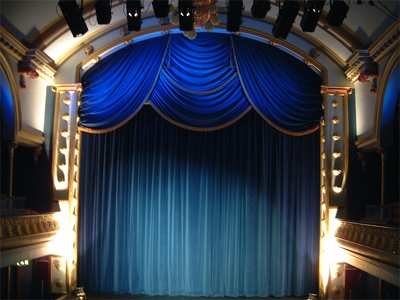 between the Institute and the Public Hall with an attractive timber
trussed roof with central roof light. Finally the Public Hall consisting of a grand
auditorium with balcony originally seating 1500 for concerts, musical performances
and recitations. The Public hall and Institute remained the focal point of Pontardawe’s
Cultural and Social activities well beyond the end of the Second World War. As the
heavy industries of the area began to decline however and economically the area started
to alter, so too did the resolve of the town to sustain the building. The ever popular
Pontardawe Snooker Club ensured that the Billiard Room continued to thrive. The
fabric of the building however deteriorated to the point where it became unsafe
and the building was eventually closed. A once thriving community building had fallen
into dereliction in a similar fashion to ones all over the South Wales Valleys. The
former Lliw Valley Borough Council had showed it’s long term intention to support
the arts in Pontardawe by the opening of Theatr Cwmtawe, the second phase of Pontardawe
Leisure Centre in September 1986. It was a flexible performance space accommodating
up to 400 seats. The policy was to promote amateur participation a
between the Institute and the Public Hall with an attractive timber
trussed roof with central roof light. Finally the Public Hall consisting of a grand
auditorium with balcony originally seating 1500 for concerts, musical performances
and recitations. The Public hall and Institute remained the focal point of Pontardawe’s
Cultural and Social activities well beyond the end of the Second World War. As the
heavy industries of the area began to decline however and economically the area started
to alter, so too did the resolve of the town to sustain the building. The ever popular
Pontardawe Snooker Club ensured that the Billiard Room continued to thrive. The
fabric of the building however deteriorated to the point where it became unsafe
and the building was eventually closed. A once thriving community building had fallen
into dereliction in a similar fashion to ones all over the South Wales Valleys. The
former Lliw Valley Borough Council had showed it’s long term intention to support
the arts in Pontardawe by the opening of Theatr Cwmtawe, the second phase of Pontardawe
Leisure Centre in September 1986. It was a flexible performance space accommodating
up to 400 seats. The policy was to promote amateur participation a nd professional
performing arts and entertainment that otherwise would not visit the area. In conjunction
with the Arts Council of Wales the venue was successful in attracting top name acts
and loyal audiences. Demand on the space was often high and capacity limiting. Therefore
in 1993 Lliw Valley Borough Council sought to improve the arts provision in Pontardawe
to meet this demand. Consequently plans were set in motion to convert the Public
Hall and Institute to a multi purpose arts centre, once again restoring it to the
focal point of Pontardawe’s Cultural and Social activities. Firstly the building
lease was purchased from the existing trustees, then with money secured from the
European Regional Development fund and Welsh Development Agency the project commences.
The architectural design contract was won by Niall Phillips Architects of Bristol
and the construction tender won by Sharpe and Ayers of Swansea. Pontardawe Arts Centre
re-
nd professional
performing arts and entertainment that otherwise would not visit the area. In conjunction
with the Arts Council of Wales the venue was successful in attracting top name acts
and loyal audiences. Demand on the space was often high and capacity limiting. Therefore
in 1993 Lliw Valley Borough Council sought to improve the arts provision in Pontardawe
to meet this demand. Consequently plans were set in motion to convert the Public
Hall and Institute to a multi purpose arts centre, once again restoring it to the
focal point of Pontardawe’s Cultural and Social activities. Firstly the building
lease was purchased from the existing trustees, then with money secured from the
European Regional Development fund and Welsh Development Agency the project commences.
The architectural design contract was won by Niall Phillips Architects of Bristol
and the construction tender won by Sharpe and Ayers of Swansea. Pontardawe Arts Centre
re- e support of Neath
Port Talbot County Borough Council funding from Arts Council of Wales enables an
exciting and vibrant live programme to be maintained. From classical music to drama
and dance, literature and comedy, blues and world music, something for everyone to
enjoy. The regular cinema screening provide the opportunity to witness the latest
blockbusters as well as the less mainstream programme of movies provided by the resident
film club. Boasting some of the finest facilities for Snooker in the area the snooker
hall remains an integral part of the building. The superb attic gallery, Oriel Lliw,
hosts exhibitions from local, national and international artists. A varied programme
is presented of two and three dimensional work, photography and craft. The dance
studio provides opportunities to participate and perform with regular classes in
drama, dance and music.
e support of Neath
Port Talbot County Borough Council funding from Arts Council of Wales enables an
exciting and vibrant live programme to be maintained. From classical music to drama
and dance, literature and comedy, blues and world music, something for everyone to
enjoy. The regular cinema screening provide the opportunity to witness the latest
blockbusters as well as the less mainstream programme of movies provided by the resident
film club. Boasting some of the finest facilities for Snooker in the area the snooker
hall remains an integral part of the building. The superb attic gallery, Oriel Lliw,
hosts exhibitions from local, national and international artists. A varied programme
is presented of two and three dimensional work, photography and craft. The dance
studio provides opportunities to participate and perform with regular classes in
drama, dance and music.

| only two can play |
| Torchwood |
| Swansea Grand Theatre History |
| Swansea Pantomimes |
| Swansea Grand Theatre Pantomime Archive |
| only two can play |
| Torchwood |
| Swansea Grand Theatre History |
| Swansea Pantomimes |
| Swansea Grand Theatre Pantomime Archive |